


The Hidden Workforce Crisis: Financial Stress Among Healthcare Workers
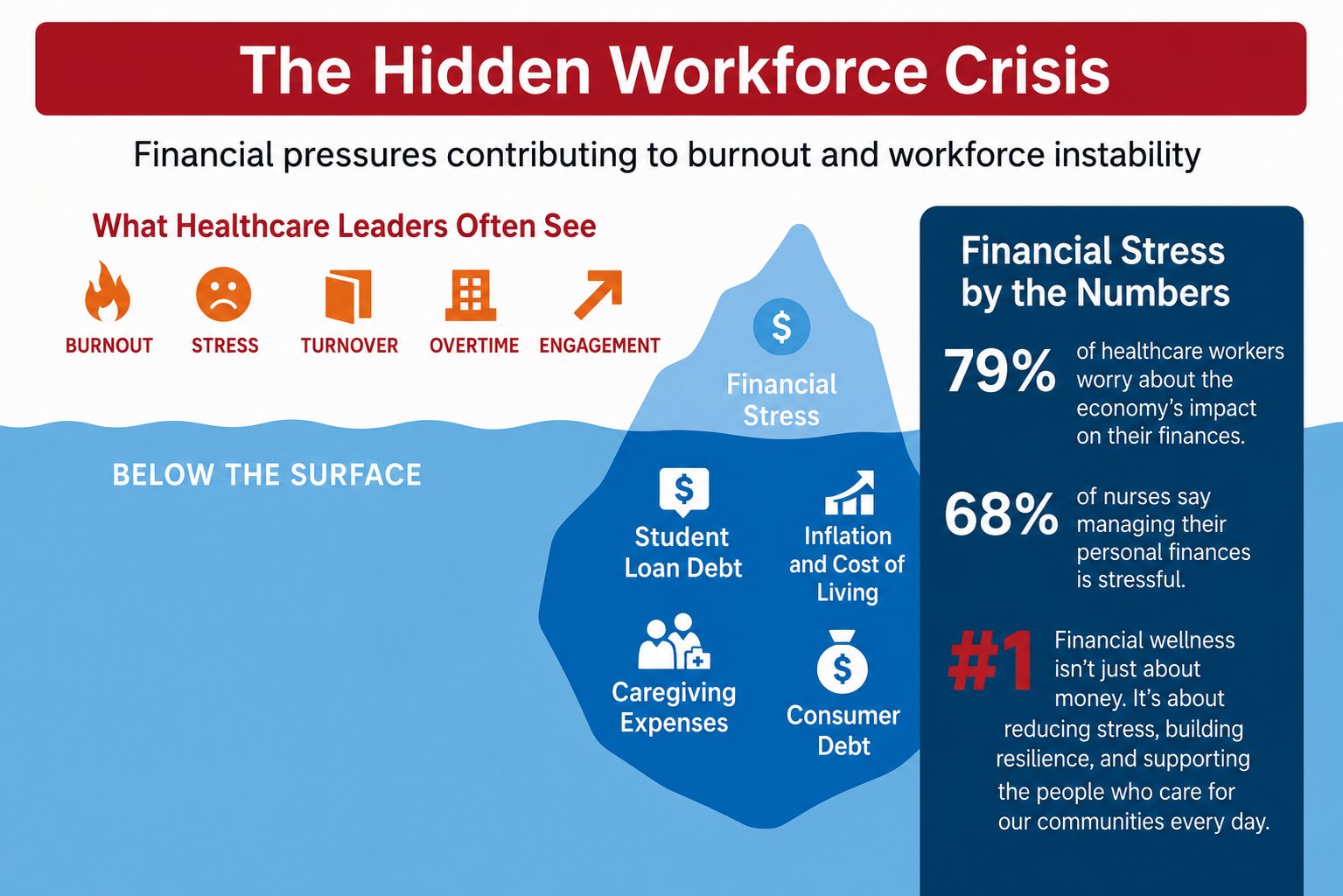
When people talk about challenges facing healthcare workers, they often focus on staffing shortages, burnout, or long hours. But another issue is quietly affecting the healthcare workforce: financial stress.
Recent surveys show that financial well-being is now one of the weakest areas of overall employee wellness. In a 2026 national workplace study, financial well-being ranked last among five dimensions of wellness, with fewer than half of workers reporting strong financial health. Researchers also found that financial stress continues to be one of the most persistent contributors to declining employee well-being and burnout.
Healthcare professionals face unique financial pressures. Student loan debt, rising housing costs, inflation, irregular schedules, and career transitions can all add strain. A survey of nurses found that 68% reported feeling stressed about managing their personal finances, while many reported concerns about paying for groceries, housing, and other everyday expenses.
Financial stress doesn’t stay at home. Research shows it can affect sleep, mental health, job satisfaction, focus, and overall workplace well-being. For healthcare organizations already dealing with workforce shortages and burnout, financial pressure can become another obstacle to retention and engagement.
Four Ways to Reduce Financial Stress
- Build an emergency fund: Even a small emergency fund can help reduce anxiety when unexpected expenses arise.
- Give every dollar a purpose: Separate short-term savings, emergency funds, and long-term goals into different accounts to make progress easier to track.
- Review high-interest debt: Focusing on credit cards and other high-rate debt can improve monthly cash flow over time.
- Schedule a financial checkup: A periodic review of your savings, debt, retirement goals, and spending habits can help identify opportunities and reduce uncertainty.
Healthcare workers spend their careers caring for others. Taking time to care for your own financial well-being is one of the most important investments you can make in your future. AHCU has resources to help, including a personal financial coach
Sources: WebMD Health Services 2026 Workplace & Employee Survey Report; Healthcare Businesswomen’s Association Wellness Survey; IntelyCare/DailyPay Healthcare Worker Survey. [investmentnews.com], [finance.yahoo.com], [hbanet.org], [forbes.com], [mcknights.com]

We're Here to Support You

Personal Financial Coaching That Works for Your Life in Healthcare


Take Charge of Your Money with My Financial Pul$e
Track spending, connect all your accounts, and reach your goals faster—everything you need for smarter financial control in one place.

Join the Thousands of Healthcare Professionals Who Trust AHCU
You spend your days caring for others. We think you deserve a financial partner who cares for you.